
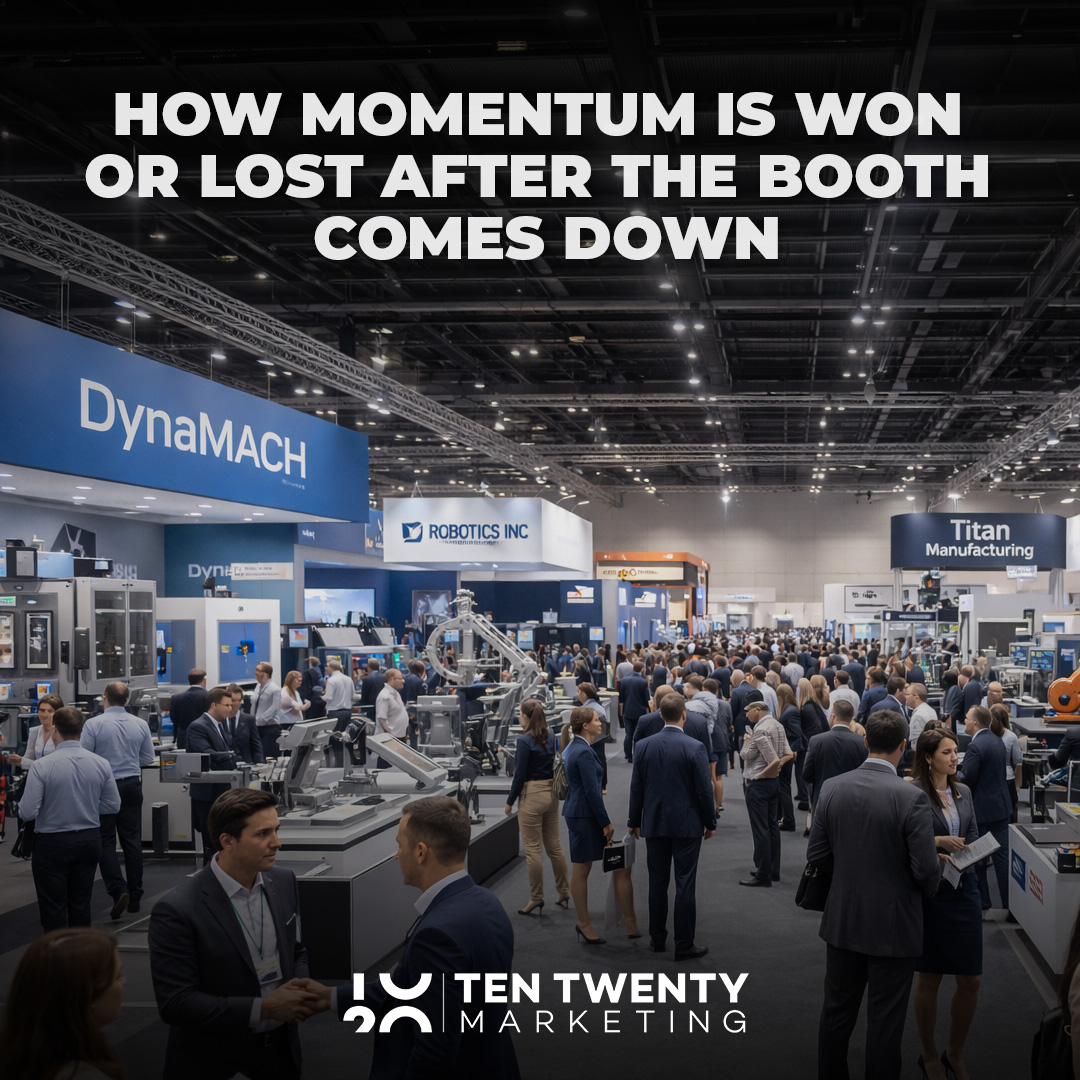
How momentum is won or lost after the booth comes down
In B2B, events often feel like peaks. Months of planning lead to a few intense days of meetings, conversations, and activity. Booths are staffed. Calendars are full. Energy is high.
Then the event ends.
Teams travel home, inboxes fill up, and attention shifts back to day-to-day priorities. Within a week or two, the momentum that felt so tangible on the show floor has largely evaporated.
This is where most event marketing quietly underperforms. Not because the event itself was ineffective, but because it was treated as a moment instead of a process.
Events create energy, not conclusions
Trade shows, conferences, and field events are powerful because they compress awareness, credibility, and human connection into a short period. They introduce your company to buyers who matter. They create familiarity quickly. They make conversations easier.
What they rarely do is close deals on the spot.
Most B2B buyers are not prepared to make significant decisions during an event. They are gathering information, comparing options, and sharing insights with their teams. The event simply moves your company into consideration faster.
Without a plan for what comes next, that consideration fades.
The fragile window after the event
The period immediately following an event is a fragile window. Buyers still remember the conversations. Your brand is still recognizable. The context is still fresh.
At the same time, reality sets in. Buyers return to packed schedules. Internal priorities resurface. New distractions appear.
If nothing reinforces the event experience during this window, attention shifts elsewhere. Your company becomes a memory rather than a priority.
A 30-day afterlife is not about pushing harder. It is about staying present while buyers decide what to do next.
Why immediate follow-up is not enough
Most teams understand the importance of follow-up. Emails are sent. Sales reaches out. Calendars are updated.
What is often missing is continuity.
A single follow-up message, no matter how well written, cannot carry the weight of the entire event. It assumes the buyer is ready to act immediately, which is rarely the case.
Buyers need time. They need reminders. They need reinforcement that keeps the conversation alive without forcing a decision.
That is what the afterlife provides.
How a 30-day afterlife actually works
A well-designed afterlife extends the story of the event rather than restarting it. It reminds buyers why they engaged in the first place and reinforces the value of that interaction.
This can take many forms. Sales outreach that references specific conversations. Content that addresses questions raised at the event. Digital reinforcement that keeps the brand visible while buyers evaluate options.
The goal is not to overwhelm. It is to create a steady presence that feels helpful rather than intrusive.
Over 30 days, this presence builds familiarity and trust at a moment when buyers are most likely to be receptive.
Supporting sales while decisions take shape
Sales teams benefit directly from a structured afterlife. Conversations do not go cold between meetings. Prospects recognize the brand when outreach continues. Follow-ups feel natural rather than repetitive.
This support is especially valuable in longer sales cycles, where decisions unfold over weeks or months. The afterlife bridges the gap between initial interest and meaningful progress.
Sales no longer have to restart the conversation every time they reach out.
The role of digital reinforcement
Digital channels play a critical role in extending events beyond the show floor. Retargeting, geo-targeting, and consistent content distribution keep marketing present without demanding attention.
Buyers may not click or engage overtly, but they notice. Recognition builds. Familiarity deepens.
This quiet reinforcement makes later conversations easier, even if the buyer cannot point to a specific touchpoint.
Why skipping the afterlife is expensive
Events require significant investment of time, money, and energy. Treating them as standalone moments leaves value on the table.
Without an afterlife, the awareness generated at the event decays quickly. Sales must work harder to maintain momentum. Marketing efforts feel disconnected.
A 30-day afterlife protects that investment. It ensures that the energy created during the event has time to compound rather than dissipate.
Turning events into engines, not spikes
The most effective B2B event strategies view events as anchors in a broader rhythm, not isolated spikes of activity. Each event feeds into a planned period of follow-up and reinforcement.
This approach does not require more effort. It requires better sequencing.
When event marketing is given a proper afterlife, momentum lasts longer. Conversations progress more smoothly. Events stop feeling like high-risk bets and start functioning as reliable engines of awareness and trust.
In B2B, what happens after the event often matters more than what happens on the floor.